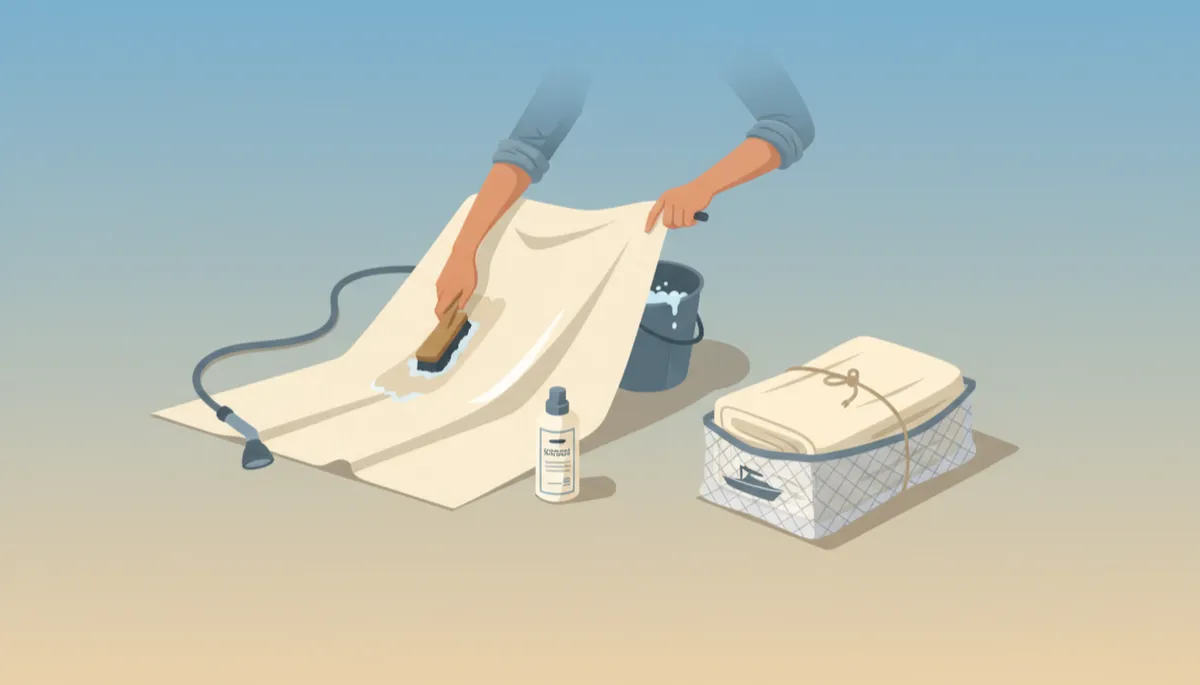
Clean & Store Sunbrella Canvas for Boating Season
Boating, Canvas Care, Sunbrella Fabric
How to Clean and Store Sunbrella Canvas at the End of Boating Season
Sunbrella canvas is famous for its durability, colorfastness, and weather‑resistance, but it still needs a little end‑of‑season TLC if you want it to look great year after year. This step‑by‑step guide walks you through how to clean and store your Sunbrella boat canvas like a pro so it’s fresh, mold‑free, and ready for the first launch next season.
Why End‑of‑Season Care Matters for Sunbrella Canvas
Sunbrella fabric is engineered to handle sun, salt, and spray, but months on the water inevitably leave behind dirt, salt crystals, bird droppings, sunscreen, and mildew spores. If you haul the boat and immediately stash the canvas without cleaning it, those contaminants sit on the fabric all winter, slowly degrading water repellency and encouraging mildew growth on any embedded dirt. A thorough clean and careful storage routine at the end of boating season dramatically extends the life of your canvas, keeps zippers and snaps working smoothly, and preserves that crisp, like‑new look.
💡 Pro Tip: Plan your canvas cleaning for a dry, mild day so the fabric has plenty of time to air‑dry completely before storage.
Step 1: Remove and Inspect Your Sunbrella Canvas
Start by carefully removing all Sunbrella pieces from your boat—biminis, cockpit enclosures, dodgers, covers, and cushions with Sunbrella covers. Work methodically so you remember how everything goes back together in the spring. Take a moment to inspect each panel under good light. Look for:
Worn or frayed stitching along seams and zippers
Small tears or chafe spots where the canvas rubs hardware or rails
Cloudy or scratched clear vinyl windows (if your enclosure has them)
Stubborn stains, bird droppings, tree sap, or mildew spots
Note any issues that may need repair. End of season is the perfect time to get canvas work done, since many shops are less busy and you won’t miss the gear while the boat is on the hard.
Step 2: Dry Brush and Rinse Off Loose Dirt and Salt
Before you reach for soap, remove as much loose debris as possible. Lay the canvas flat on a clean deck, dock, or driveway. Using a soft‑bristle brush, gently sweep away dust, leaves, and dried salt. Pay attention to seams, corners, and around snaps or zippers where grit tends to collect.
Next, rinse thoroughly with fresh water. A garden hose with a gentle spray setting works well. Avoid using a pressure washer; high pressure can drive dirt deeper into the fibers and damage stitching or any clear vinyl sections. Rinsing not only removes surface grime, it also dissolves salt crystals that can abrade the fabric over time.
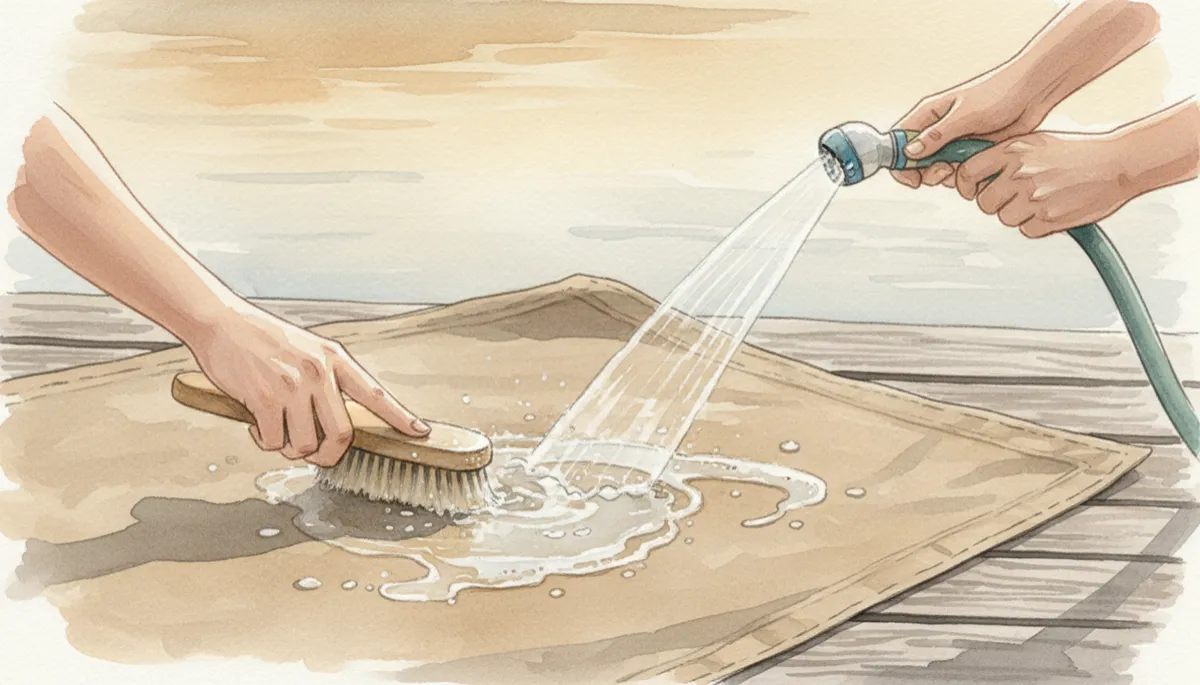
A gentle brush and fresh-water rinse remove grit before deeper cleaning.
Step 3: Mix a Mild Cleaning Solution Safe for Sunbrella
Sunbrella fabrics are solution‑dyed acrylic, which means the color runs all the way through the fibers, but harsh cleaners can still strip away protective finishes. For routine end‑of‑season cleaning, a simple mild soap solution is usually all you need. In a clean bucket, mix:
Cool to lukewarm water (never boiling or extremely hot)
A small amount of mild soap, such as dishwashing liquid or gentle laundry detergent without bleach, fabric softeners, or brighteners
Avoid powdered detergents, solvents, and any cleaner that promises to “whiten” or “brighten.” These often contain additives that can damage the fabric’s water‑repellent finish or leave residues that attract more dirt later. If you prefer, you can also use a cleaner specifically labeled as safe for Sunbrella or marine canvas.
⚠️ Warning: Never use straight bleach or harsh solvents on your canvas unless you are following Sunbrella’s official stain or mildew removal instructions, and always rinse extremely thoroughly afterward.
Step 4: Gently Scrub and Rinse Thoroughly
Dip a soft‑bristle brush or sponge into your cleaning solution and work it into the fabric in small sections. Use circular motions with light to moderate pressure—enough to loosen soil without rough scrubbing that could fuzz the fibers. Focus extra attention on high‑touch areas like handholds, zipper paths, and edges that rest against rails or seats, where oils and grime tend to accumulate.
Allow the soapy solution to sit on the fabric for a few minutes so it can lift embedded dirt. Then rinse thoroughly with fresh water until the water runs clear and no suds remain. Leftover soap residue can attract dirt and may interfere with the fabric’s ability to shed water, so be generous with your rinsing step.
Step 5: Treat Stubborn Stains and Mildew Spots
Most light stains will disappear with mild soap and water, but end‑of‑ season cleaning is the ideal time to address stubborn spots. For bird droppings, sunscreen smears, or food stains, repeat the cleaning process and gently work the area a bit longer. For mildew on Sunbrella, the key is to clean the spores off the surface; the acrylic fiber itself will not support mildew growth, but dirt on the fabric can.
Sunbrella’s official care guidelines allow a diluted bleach solution for persistent mildew, typically combined with mild soap. If you choose this route, follow the manufacturer’s recommended ratios, test a small, inconspicuous area first, and never skip the final, very thorough rinse. When in doubt, or if your canvas is older and already showing wear, consider consulting a professional canvas cleaner who specializes in marine fabrics.
Step 6: Air‑Dry Completely Before Storage
Once your Sunbrella canvas is clean, resist the urge to rush it into storage. Moisture trapped in folded fabric is the number‑one cause of off‑season mildew and musty odors. To dry properly, hang or lay the canvas out in a clean, shaded, well‑ventilated area. Avoid direct, intense sunlight for long periods while wet, as this can stress both fabric and stitching, especially on older pieces.
Check that seams, hems, and areas around zippers are completely dry. If you washed cushion covers, be sure the cushion cores are dry as well before reinserting or storing them separately. Drying may take several hours or even a full day depending on humidity, so plan accordingly.
Step 7: Refresh Water Repellency if Needed
Over time and after repeated cleanings, Sunbrella’s water‑repellent finish can gradually diminish. End of season is a convenient time to evaluate whether your canvas needs a boost. To test, sprinkle a bit of clean water on the fully dry fabric. If the water beads up and rolls off, the repellency is still strong. If it soaks in quickly and darkens the fabric, consider applying a fabric guard product recommended for Sunbrella.
Always follow the instructions on the product label, apply in a well‑ ventilated outdoor area, and ensure the canvas is clean and dry before treatment. Allow the fabric to dry completely again after application before moving on to folding and storage.
Step 8: Prepare Zippers, Snaps, and Hardware
Canvas care isn’t just about the fabric. Your hardware needs attention too. Once everything is dry:
Rinse zippers and snaps with fresh water to remove salt and grit.
After drying, apply a zipper lubricant or a light, marine‑safe product to keep them sliding smoothly.
Check for any missing or corroded snaps and mark them for replacement before next season.
Well‑maintained hardware makes reinstalling your canvas in the spring quicker and far less frustrating.
Step 9: Fold and Store Sunbrella Canvas the Right Way
With everything clean, dry, and treated, it’s time to put your canvas away for the off‑season. How you fold and store it can make a big difference in how it looks when you pull it out next year.
Fold loosely, don’t cram. Avoid tight folds and sharp creases, especially across clear vinyl windows. Roll those sections in soft cloth if needed to prevent sticking or distortion.
Use breathable storage bags. Canvas or mesh bags are ideal. Skip plastic garbage bags or airtight bins, which can trap moisture and encourage mildew if any humidity remains.
Label each piece. A simple tag or note (“aft bimini,” “dodger side panel, port”) saves confusion at spring launch.
Store the bags in a clean, dry, well‑ventilated area away from direct sunlight and extreme temperatures—think a climate‑controlled garage, closet, or storage room rather than a damp basement or unheated shed. If rodents are a concern in your area, consider sealed containers with a few small ventilation holes and use rodent deterrents nearby (never directly on the fabric).
Step 10: Quick Canvas Checklist for Next Season
As you finish your end‑of‑season routine, make a simple checklist and tuck it into one of the storage bags or your boat file. Include notes like:
Any repairs you’ve scheduled or still need to arrange
Areas to monitor next season for chafe or leaks
The date you last applied a water‑repellent treatment
When spring arrives, you’ll know exactly what you’re working with and can reinstall your Sunbrella canvas quickly, with confidence that it’s clean, protected, and ready for another season on the water.
Enjoy Longer‑Lasting Canvas with a Simple Seasonal Routine
Cleaning and storing Sunbrella canvas at the end of boating season doesn’t have to be complicated or time‑consuming. By following a straightforward routine—remove, inspect, rinse, wash, dry, protect, and store—you protect your investment and keep your boat looking sharp. A couple of hours now can save you from dealing with mildew stains, stiff zippers, and prematurely worn fabric when you’d rather be casting off lines next spring.
Sunbrella is designed for real‑world boating life: sun, spray, and constant use. With thoughtful end‑of‑season care and smart storage, you’ll get many seasons of reliable performance and good looks from your canvas, so every launch day starts with gear that’s as ready as you are to get back out on the water.
