
The Upholstery Insider
The Upholstery Insider by Canvas Guy - is where drivers, businesses, and boat owners in Utah can learn more about upholstery and canvas repair. Explore our guides, see real projects, and discover how to make your interior last longer.
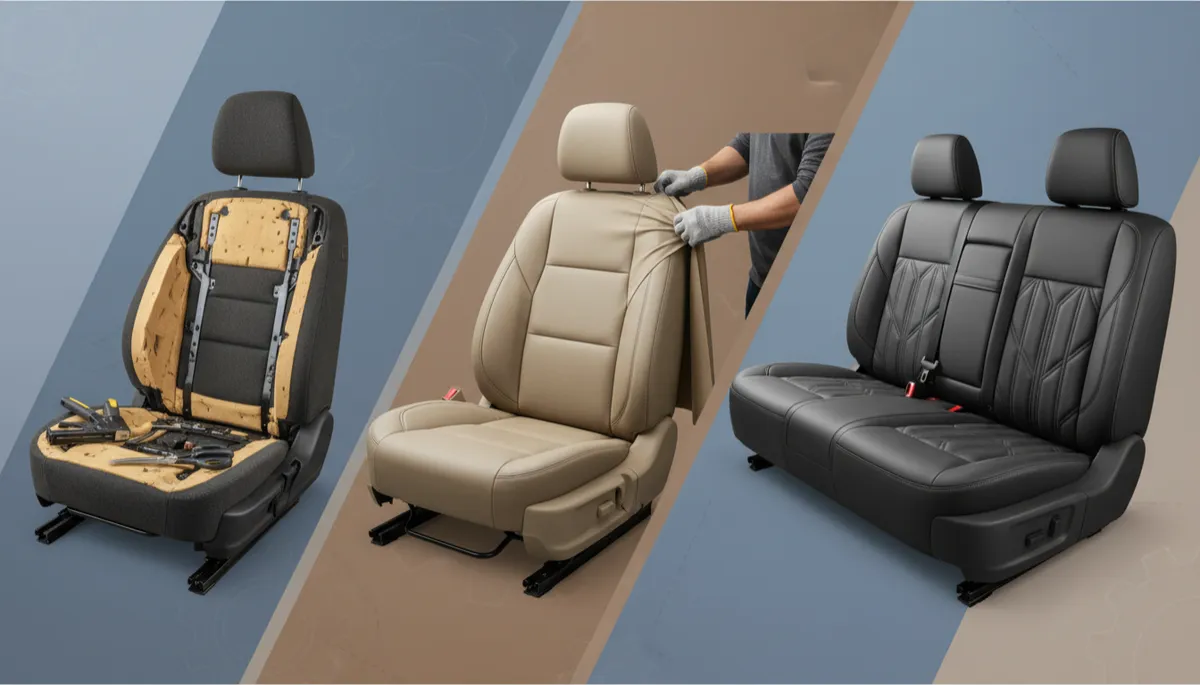
Reupholster Car Seats: DIY vs Professional Time
Auto Upholstery, Car Seat Restoration, DIY vs Professional
How Many Labor Hours Does It Take to Reupholster Common Vehicle Seats?
If you are thinking about refreshing your car’s interior, one of the first questions you will have is, “How long will it actually take to reupholster these seats?” Whether you are budgeting for a professional job or weighing up a DIY project, understanding typical labor hours for different types of vehicle seats helps you plan time, cost, and expectations realistically.
Why Labor Hours Matter When Reupholstering Seats
Upholstery is one of those jobs that looks simple from the outside, but once you remove the first seat, you quickly realize how many steps are involved. Labor hours drive most of the cost on a reupholstery quote, and they also determine how long you will be without your vehicle. Knowing typical time ranges for different seats helps you:
Estimate how many days your car, truck, or SUV will be in the shop.
Understand why a shop’s quote may be higher for certain seat styles or features.
Decide if a DIY project is realistic for your skill level and schedule.
In this guide, we will look at typical labor hours for reupholstering common vehicle seats—from basic compact car buckets to third-row minivan benches—so you can compare, plan, and make informed decisions. Keep in mind these are average ranges for an experienced professional; a first-time DIYer can easily take two to three times longer.
What’s Included in “Labor Hours” for Seat Reupholstery?
When a shop quotes labor hours, they are not just thinking about stapling new fabric onto foam. A full reupholstery job for a seat usually includes several stages:
Removing the seat from the vehicle (and disconnecting wiring for airbags, seat heaters, and power adjustments if equipped).
Stripping the old upholstery, hog rings, and fasteners, and assessing the condition of the foam and frame.
Repairing or replacing foam where necessary, especially on bolsters and high-wear areas.
Fitting and securing the new covers, making sure seams line up and the material is tight, even, and wrinkle-free.
Reinstalling the seat and reconnecting all electrical components, then testing them for safety and function.
📌 Key Takeaway: Labor hours are about much more than just sewing. Complex seats with electronics, airbag systems, and detailed stitching patterns naturally take longer and cost more to reupholster.
Compact & Economy Car Front Bucket Seats
Many compact and economy cars use relatively simple front bucket seats. They typically have manual adjustments, modest side bolsters, and fewer electronic features. Because of this, they are among the quickest seats to reupholster.
Typical Labor Hours: Compact Front Bucket (Per Seat)
Basic cloth to cloth: approximately 2.0–3.0 hours per seat.
Cloth to vinyl or leather upgrade: around 3.0–4.0 hours per seat due to tighter fit and more careful stretching required.
For a pair of front buckets in a small sedan or hatchback, you are usually looking at 4–8 labor hours total, depending on material changes and whether any foam repair is needed. If the foam is in great shape and the new covers are pre-made to fit, the job tends toward the lower end of that range.
💡 Pro Tip: If you are on a budget, reupholstering only the front buckets of a compact car is often a one-day job for a shop, which keeps both labor hours and rental-car costs manageable.
Mid-Size Sedan Front Seats: Manual vs. Power and Heated Seats
Mid-size sedans often introduce more complexity: thicker bolsters, lumbar support, and sometimes power adjustments or heating elements. Each of those features adds steps and care to the process, which increases labor hours.
Manual Front Seats (Mid-Size Sedan)
Cloth-to-cloth replacement: roughly 2.5–3.5 hours per seat.
Cloth to leather or high-grade vinyl: typically 3.5–4.5 hours per seat.
Power or Heated Front Seats
Power adjustments only: about 3.5–4.5 hours per seat, largely due to the extra care needed when removing and reinstalling the seat and working around wiring harnesses and switches.
Power + seat heaters: expect 4.0–5.5 hours per seat, especially if heating elements need to be preserved, repositioned, or replaced.
In many modern sedans, front seat airbags are integrated into the seat sides. This safety feature requires additional care and sometimes specialized, airbag-compatible stitching, which also contributes to labor time and cost.
Rear Bench Seats in Sedans: Split-Fold vs. Fixed Bench
Rear seats in sedans can be surprisingly time-consuming. While they have fewer electronics, they often require more disassembly to access fasteners and remove the seatbacks, especially when they fold down in multiple sections.
Fixed Rear Bench (Non-Folding)
Bottom cushion: 1.5–2.0 hours.
Backrest (one piece): 2.0–3.0 hours.
Total labor for a simple fixed rear bench is usually around 3.5–5.0 hours, assuming no major foam repairs or custom alterations. This often makes the rear bench similar in total time to a pair of simple front buckets.
Split-Folding Rear Seats (60/40 or 40/20/40)
Bottom cushions (often two pieces): 2.0–3.0 hours total.
Multiple backrest sections: 3.0–4.5 hours, depending on how many sections and how they are mounted.
Overall, a split-folding rear seat set in a sedan usually falls in the 5.0–7.5 labor hour range. The more sections there are, the more time it takes to remove, strip, re-cover, and reinstall each piece correctly.
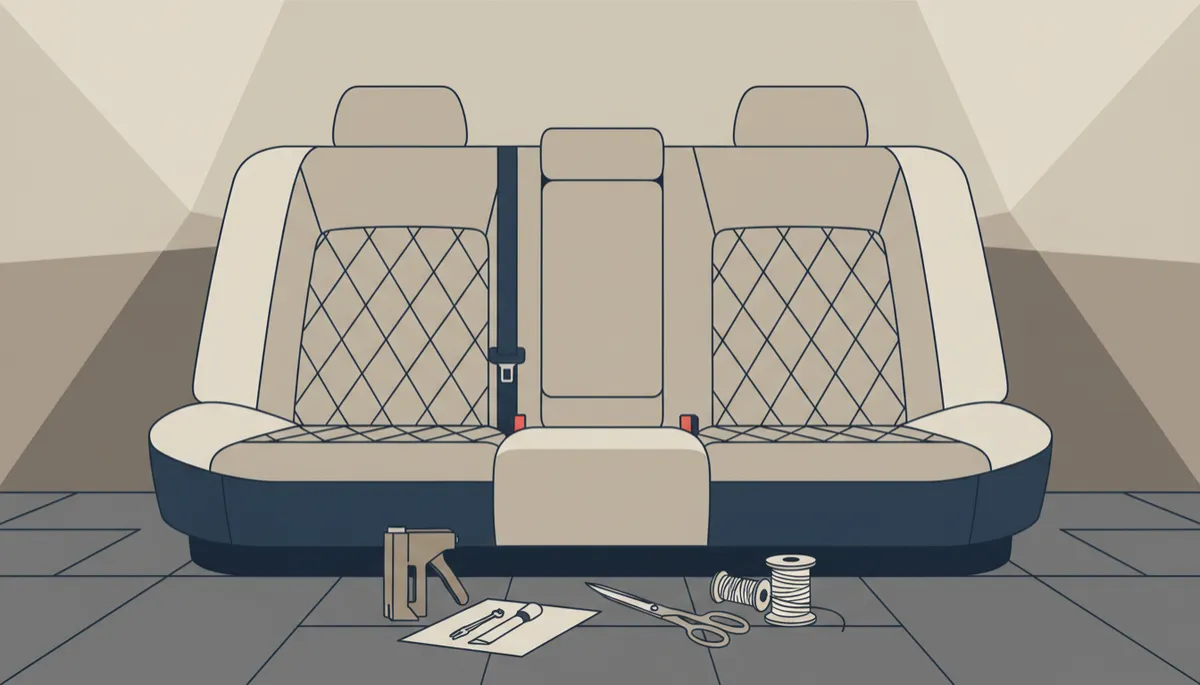
Rear benches can take several hours as each cushion and backrest is removed, stripped, and refitted.
SUV and Crossover Seats: Second and Third Rows
SUVs and crossovers add another layer of complexity with multiple rows, folding mechanisms, and sometimes removable seats. The labor hours for these vehicles depend heavily on how the seats are designed to fold, slide, and detach.
Second-Row Seats (Captain’s Chairs vs. Bench)
Many family SUVs offer either a second-row bench or two captain’s chairs. Captain’s chairs are similar to front buckets in construction but may have integrated armrests and folding mechanisms, which add time.
Second-row captain’s chair: usually 3.0–4.5 hours per seat, depending on armrests, folding hardware, and any built-in child seat anchors or electronics.
Second-row bench (split-fold): about 5.0–7.0 hours total for the bottom and back sections, similar to a complex sedan rear seat but often with more folding joints and latches to work around.
Third-Row Seats in SUVs and Minivans
Third-row seats are typically more compact and designed to fold flat into the floor or against the sides of the vehicle. Access can be tight, and removing them sometimes involves extra steps, which affects labor time even though the seating area is smaller.
Compact third-row bench: approximately 3.0–4.5 hours for the entire row, including bottom and backrest sections.
Split third-row seats (individual sections): around 4.0–6.0 hours total, depending on how many separate pieces and how they mount and fold.
For a full SUV interior—front buckets, second-row bench or captain’s chairs, and a third row—it is not unusual for a professional shop to estimate 18–30 labor hours, spread over two to three days, depending on the seat count and complexity.
Pickup Truck Seats: Benches, Buckets, and Work-Truck Interiors
Pickup trucks range from basic work-truck benches to luxurious leather buckets with power everything. Labor hours vary just as widely. The good news is that many trucks have relatively easy-to-remove seats and fewer tight interior spaces, which can save some time.
Front Bench Seat (Single Piece or 40/20/40 Split)
Simple front bench (cloth, manual): 3.0–4.5 hours for the entire seat, including back and bottom. Many work trucks fall into this category.
40/20/40 split bench with folding center section and storage: 4.0–6.0 hours, as each section needs to be removed and re-covered separately, and the center console/armrest may require additional disassembly.
Pickup Front Buckets with Console
Manual cloth buckets: around 2.5–3.5 hours per seat, often similar to mid-size sedan seats but with more robust frames.
Power leather buckets with heaters and ventilation: 4.0–6.0 hours per seat, as there are multiple layers (perforated leather, foam channels for cooling, heater pads) to work around and protect.
Rear Truck Seats (Extended and Crew Cab)
Simple flip-up rear bench: typically 2.5–4.0 hours for bottom and backrest, as these are often straightforward to remove and re-cover.
Split rear seats with storage compartments and armrests: 3.5–5.5 hours, depending on how many panels and covers are involved.
For a typical crew-cab truck with front buckets and a rear bench, a complete interior reupholstery can easily total 15–24 labor hours, particularly if upgrading from cloth to leather and dealing with seat heaters or ventilation systems.
Sports Cars and Performance Seats: Bolsters, Stitching, and Custom Work
Sports cars and performance vehicles often have heavily bolstered seats, intricate stitching patterns, and high-end materials. These seats are designed to hold the driver in place during spirited driving, which means more curves, seams, and tension points for an upholsterer to deal with.
Standard Sport Seats (Factory Style)
Cloth or Alcantara-style sport buckets: 3.5–5.0 hours per seat, due to additional bolsters and shaping that require precise stretching and alignment of panels.
Factory leather sport seats with contrast stitching: 4.5–6.5 hours per seat, especially if the upholsterer is matching factory patterns, piping, and seam placements.
Racing-Style Seats and Custom Designs
Fixed-back racing shells (re-cover only): 2.5–4.0 hours per seat, as there are fewer moving parts but often more complex shapes to wrap cleanly.
Fully custom design (unique patterns, logos, or quilting): can reach 6.0–10.0 hours per seat or more, because the upholsterer is essentially designing and fitting from scratch rather than installing pre-made covers.
📌 Key Takeaway: The more sculpted and detailed the seat, the more labor hours it takes. Performance seats demand patience and precision, and that is reflected in both time and price.
Classic Cars and Restoration Projects: When Hours Add Up Fast
Classic cars, vintage trucks, and full restorations are a world of their own. Many of these seats require not only new covers but also rebuilding springs, frames, and foam that have deteriorated over decades. Original-style materials and patterns can also be more demanding to sew and fit.
Typical Labor Hours for Classic Vehicle Seats
Single classic front bench seat (sedan or truck): 5.0–8.0 hours, especially if springs need repair, burlap or webbing is replaced, and foam is reshaped or rebuilt to restore the original profile.
Pair of classic bucket seats: 4.0–6.0 hours per seat, or 8.0–12.0 hours total, depending on condition and how closely the shop is replicating factory details like pleats and piping.
Complete classic car seating set (front and rear): frequently 15–30 labor hours, and sometimes more for high-end restorations or custom interiors.
Because every restoration is unique, shops often provide a broad estimate for classic vehicles and adjust once they see what is under the old covers. Rusted frames, broken springs, and crumbling foam can add several hours to the original plan.
Child Seats, Jump Seats, and Other Specialty Seating
Some vehicles include smaller or less common seating, such as third-row jump seats in older SUVs, side-facing seats in vans, or removable seats in cargo-style vehicles. These pieces are usually simpler but can still take time to disassemble and re-cover properly.
Small jump seat or auxiliary seat: typically 1.5–3.0 hours per seat, depending on how it mounts and folds.
Integrated child booster cushions in rear seats: often included in the overall rear-seat estimate but may add 0.5–1.0 extra hour for the extra hinges and mechanisms.
How Electronics and Airbags Affect Labor Hours
Modern seats often contain a surprising amount of technology: occupancy sensors, side airbags, heating and cooling elements, lumbar motors, memory modules, and more. Working around these systems safely and correctly takes time and care.
Side airbags: require airbag-compatible materials and stitching, and sometimes special patterns. This can add 0.5–1.0 hour per seat compared with a similar seat without airbags.
Seat heaters and coolers: need to be preserved or replaced, and their wiring must be routed carefully. This can add 0.5–1.5 hours per seat, especially if elements are being upgraded or repaired.
⚠️ Warning: Seats with integrated airbags should be handled by professionals familiar with safety requirements. Incorrect reinstallation can compromise airbag deployment and passenger safety.
DIY vs. Professional: How Your Hours Compare
The labor-hour figures in this guide describe what an experienced professional upholsterer can usually achieve. If you are considering a DIY project, it is important to adjust your expectations. For a first-time or occasional DIYer, a good rule of thumb is:
Plan on 2–3 times the professional labor hours, especially for your first seat. As you gain experience, your time may come down closer to 1.5–2 times professional pace.
For example, if a shop can reupholster a compact front bucket seat in three hours, you might realistically spend 6–9 hours on that same seat at home, particularly if you are learning to remove and reinstall the seat, handle hog rings or staples, and stretch fabric evenly without wrinkles.
When DIY Makes Sense (and When It Does Not)
DIY is more realistic for simple, manual cloth seats with no airbags or complex electronics. Here, extra hours mainly affect your weekend, not your safety.
Professional work is strongly recommended for seats with integrated airbags, advanced electronics, or high-end materials, where mistakes can be costly or dangerous.
Quick Reference: Typical Labor Hours by Common Seat Type
Seat Type | Typical Professional Labor Hours |
|---|---|
Compact car front bucket (cloth) | 2.0–3.0 per seat |
Compact bucket (cloth to leather) | 3.0–4.0 per seat |
Mid-size sedan manual front seat | 2.5–3.5 per seat |
Power/heated front seat | 4.0–5.5 per seat |
Fixed rear sedan bench (bottom + back) | 3.5–5.0 total |
Split-fold rear sedan seats | 5.0–7.5 total |
Second-row SUV captain’s chair | 3.0–4.5 per seat |
Third-row SUV bench | 3.0–4.5 total |
Work-truck front bench | 3.0–4.5 total |
Leather truck bucket (power/heated) | 4.0–6.0 per seat |
Sport/performance seat (factory style) | 3.5–6.5 per seat |
Classic front bench (restoration) | 5.0–8.0 total |
Factors That Can Increase or Decrease Labor Hours
While the ranges above cover most common situations, a few key factors can push labor hours higher or lower for any given seat:
Condition of the seat: Torn foam, broken frames, or rusted hardware add repair time before new covers can be installed.
Type of material: Leather and thick vinyl often take longer to stretch and align than basic cloth, especially around curves and bolsters.
Pre-made covers vs. fully custom: Installing well-fitting, pre-made covers is generally faster than designing, cutting, and sewing custom covers from raw material.
Access and removal: Some vehicles make it easy to remove seats; others require partial disassembly of trim panels, consoles, or seat tracks, which adds time.
Turning Labor Hours into Real-World Planning
Knowing the approximate labor hours for your particular seats helps you ask better questions and avoid surprises. When you contact an upholstery shop, you can describe your vehicle and seats in detail—front buckets or bench, manual or power, heated, with or without airbags—and then compare their time estimate with the ranges in this guide.
For example, if you drive a mid-size sedan with power, heated leather front seats and a split-fold rear bench, a complete reupholstery might reasonably involve:
Front seats: 8–11 hours total (4–5.5 each).
Rear split bench: 5–7.5 hours.
Altogether, you are likely looking at around 13–18.5 labor hours. At a shop rate of, say, $90 per hour, that translates into a significant portion of your total bill before materials. Understanding this breakdown helps you choose where to invest: perhaps upgrading just the front seats now and tackling the rear later, or choosing a durable mid-range material instead of a premium hide.
Final Thoughts: Matching Your Goals to the Time Involved
Reupholstering vehicle seats is one of the most effective ways to transform the feel of your car, truck, or SUV. But it is also a labor-intensive process, and labor hours are the backbone of both your schedule and your budget. By understanding how many hours it typically takes to reupholster different types of seats—from compact front buckets to third-row SUV benches—you can decide:
Which seats to prioritize if you are not doing the whole interior at once.
Whether a DIY approach fits your time, tools, and comfort level.
How to compare quotes from different shops more fairly and confidently.
If you are unsure where your specific vehicle falls within these ranges, take a few clear photos of your seats—front, side, and rear views—and share them with a local upholstery professional. Ask them to walk you through their expected labor hours for each seat. With the benchmarks from this guide in mind, you will be well prepared to interpret their estimate, ask informed questions, and choose the option that best matches your goals, your timeline, and your budget.

Our Customers Say It Best
"We had a ripped boat cover that we thought was beyond repair. Now it’s strong, stylish, and holding up perfectly to the elements."

“My truck’s driver seat was cracked and falling apart. After Canvas Guy worked on it, it looks better than when it was new. The difference is night and day.”

“The only upholstery shop I recommend. Honest pricing, excellent work.”

“Finally, an upholstery shop that does it right the first time. Strong stitching, durable material, and quick turnaround.”

“I was restoring my classic car and needed the seats to match the original look. Canvas Guy nailed every detail.”

“We ride ATVs hard, and the seats take a beating. Canvas Guy’s work holds up better than anything I’ve tried before.”

Your Project Deserves This Level of Quality
Get In Touch
Email: [email protected]
Address
259 S Center St.
Elsinore, UT 84724
Phone Number:
(928) 925-8258


Copyright © 2026,all right reserved