
The Upholstery Insider
The Upholstery Insider by Canvas Guy - is where drivers, businesses, and boat owners in Utah can learn more about upholstery and canvas repair. Explore our guides, see real projects, and discover how to make your interior last longer.
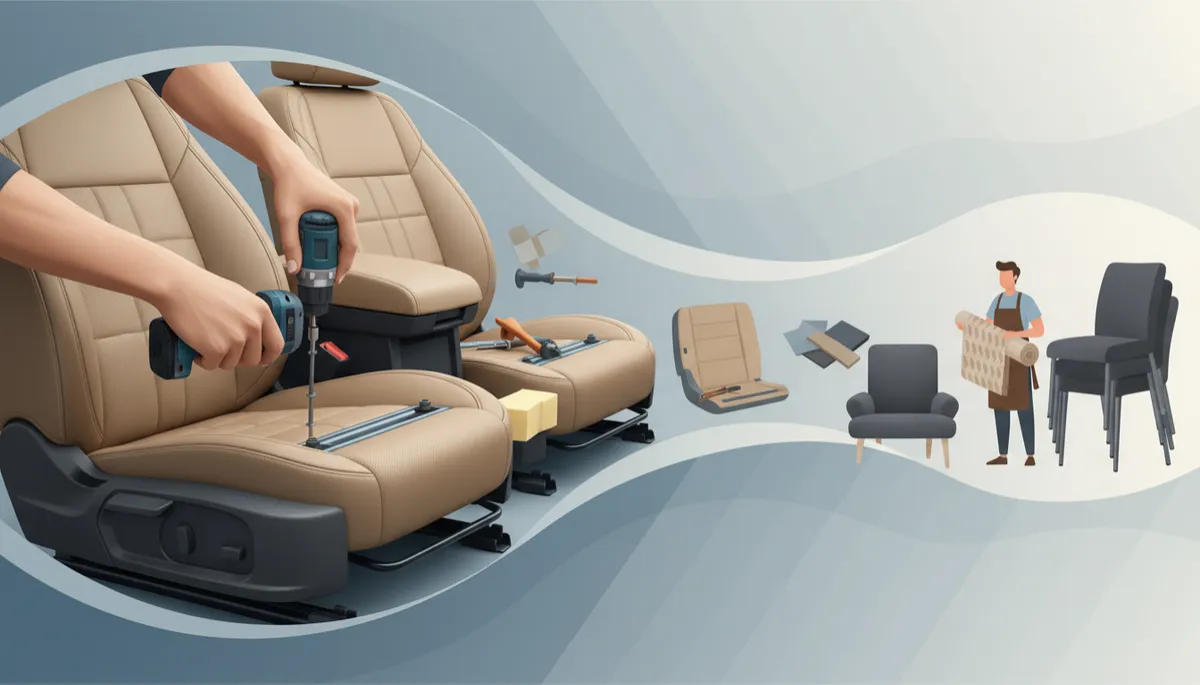
Who Handles Seat Removal in Upholstery Projects?
Home Upholstery, Car Upholstery, Seat Removal
Who Removes and Reinstalls the Seats During an Upholstery Project?
When you decide to reupholster your car, dining chairs, boat, or sofa, one practical question quickly pops up: who actually removes and reinstalls the seats? Is it you, the upholsterer, a mechanic, or someone else entirely? Understanding this responsibility upfront can save you time, money, and a lot of frustration. This guide breaks it down clearly for everyday consumers so you know exactly what to expect before your project begins.
Why Seat Removal Matters More Than You Think
Seat removal and reinstallation may sound like a simple side task, but it is actually a crucial part of any upholstery project. Whether we are talking about vehicle seats or household furniture, how those seats come off and go back on affects:
The overall safety of your car or boat (airbags, seat belts, wiring, and mounting points)
The final look and comfort of your furniture or vehicle interior
The time and cost of the project, especially if extra labor is required
Because of that, many upholsterers have clear policies about who removes and reinstalls seats. Some insist on doing it themselves; others prefer you handle it; and in certain cases, a third-party professional is involved, such as a mechanic or marine technician. The answer depends on what you are having upholstered and where you take it.
In General: Who Is Responsible for Seat Removal and Reinstallation?
Broadly speaking, there are three main possibilities:
The upholstery shop handles everything – They remove the seats, do the upholstery work, and reinstall them for you.
You (the customer) remove and reinstall the seats – You bring in loose seats or cushions only, and you are responsible for putting them back afterward.
A third-party professional – A mechanic, marine technician, or installer removes and reinstalls the seats, while the upholsterer focuses solely on the fabric and padding.
💡 Pro Tip: Always ask, in writing if possible, whether seat removal and reinstallation are included in your upholstery quote. This avoids last-minute surprises on cost and responsibility.
For Car Upholstery: Who Removes and Reinstalls Vehicle Seats?
With cars, trucks, and SUVs, the question of who handles the seats becomes especially important because modern vehicles are packed with electronics and safety systems. Seats often contain:
Side airbags and airbag sensors
Seat heaters and cooling elements
Power adjustment motors and wiring harnesses
Occupancy sensors tied into the airbag system
Option 1: The Auto Upholstery Shop Does It All
Many full-service auto upholstery shops will remove and reinstall your car seats as part of the job. Their technicians are used to working with seat frames, bolts, and trim pieces, and they know how to disconnect and reconnect wiring safely. In this case:
You drop off the entire vehicle.
The shop removes the seats, performs the upholstery work, and reinstalls them once finished.
They may reset warning lights or advise you if a dealership needs to do a system reset.
This is the most convenient option and is common for everyday drivers who do not want to deal with tools or risk damaging electronics. It may cost a bit more in labor, but the peace of mind is often worth it.
Option 2: You Remove the Seats Yourself (DIY-Friendly Vehicles)
Some customers choose to remove their own seats and bring them to the upholsterer as loose units. This is more common with:
Older vehicles with simpler seat designs and fewer electronics
Enthusiasts who are comfortable working on their own cars
Budget-conscious projects where saving on labor is a priority
In this scenario, you are fully responsible for both removal and reinstallation. The upholsterer will typically:
Work only on the seat covers, foam, and stitching
Not handle any wiring, sensors, or electronic components beyond what is attached to the seat shell
⚠️ Warning: If your vehicle has airbags inside the seats, disconnecting them incorrectly can trigger warning lights or even deploy an airbag. For modern cars, it is usually safer to let a professional handle removal and reinstallation.
Option 3: A Mechanic or Dealership Handles the Seats
Some upholstery shops, especially smaller or traditional ones, may not want the responsibility of dealing with airbags, sensors, or complex wiring. In these cases, they may ask you to:
Have a mechanic or dealership remove the seats first, then bring them to the upholstery shop.
Return the finished seats to the mechanic for professional reinstallation and system checks.
Here, the mechanic or dealership is the party who removes and reinstalls the seats, while the upholsterer only works on the materials. This arrangement is common when warranties, safety inspections, or advanced electronics are involved.
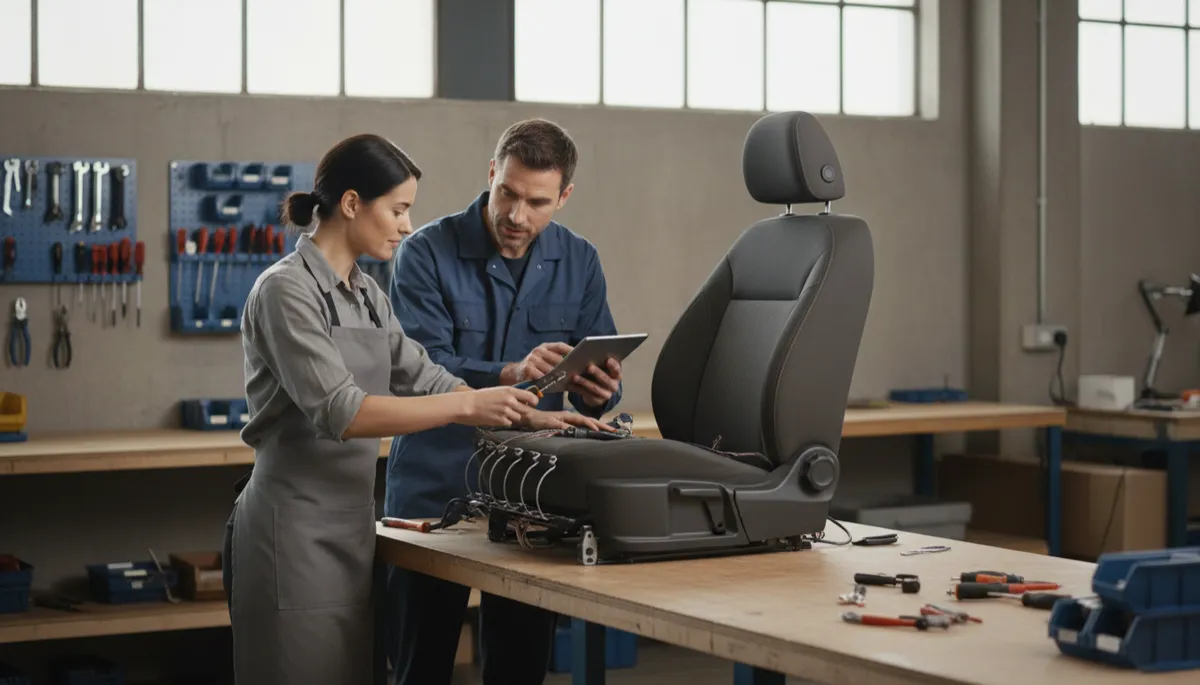
Some projects combine a mechanic’s expertise with an upholsterer’s craftsmanship for safety and quality.
For Dining Chairs and Home Furniture: Who Handles the Seats?
Household furniture is usually simpler than vehicles, but the question of who removes and reinstalls the seats still matters—especially for dining chairs, bar stools, and sofas with attached cushions or complex frames.
Dining Chairs and Bar Stools: Often a Shared Responsibility
Many dining chairs have drop-in seat pads that are screwed into the frame from underneath. For these, there are usually two approaches:
You unscrew and remove the seat pads at home, then bring just the pads to the upholsterer. After the work is done, you reinstall the seats yourself.
You bring the entire chair, and the upholsterer removes and reinstalls the seats as part of the project, usually for a small additional fee.
Because chairs are lighter and less complex than cars, many upholstery shops are happy to handle the entire process. Still, some will offer a discount if you bring in only the loose seat pads, since it saves them time in the workshop.
Sofas, Armchairs, and Sectionals: Usually the Upholsterer’s Job
For couches and armchairs, the “seat” is often built into the frame or attached with springs, webbing, and padding. In these cases, you are not expected to remove the seats yourself. Instead:
The upholstery shop either works on the entire piece in their workshop, or
They come to your home to remove cushions, detach parts, and transport them safely.
In other words, for large furniture, the upholsterer almost always removes and reinstalls the seat components. Your role is mainly to:
Clear the area so they can work and move the furniture safely
Decide on fabrics, colors, and any changes to padding or style
What About Boats, RVs, and Specialty Seating?
Boats, RVs, and specialty vehicles (like golf carts or classic cars) often have custom seats, built-in storage, or unusual mounting systems. Here, the answer to who removes and reinstalls the seats can vary even more.
Marine Upholstery (Boats)
For boats, seats may be bolted into fiberglass, attached to pedestals, or integrated into the hull. Many marine upholstery specialists are comfortable removing and reinstalling these seats themselves, but in some marinas or larger vessels, a marine technician may be brought in to help, especially if:
Seats are tied into storage compartments or fuel tank covers
There is wiring for navigation lights, speakers, or electronics running through the seat bases
In those cases, the marine technician or boatyard staff may be the ones who remove and reinstall the seats, while the upholsterer focuses purely on the cushions and covers.
RVs, Camper Vans, and Motorhomes
RVs and camper vans often blend automotive seating with built-in furniture. Depending on the project:
Driver and passenger seats may be removed and reinstalled by an auto upholsterer or mechanic, similar to a regular vehicle.
Built-in benches, dinettes, and sofa beds are usually handled by the upholsterer, sometimes with help from an RV technician if structures need to be disassembled.
How to Find Out Who Will Handle Your Seats (Before You Commit)
Because policies vary from one shop to another, the best approach is to ask very specific questions before you approve a quote. Here are some helpful ways to phrase them:
“Does your quote include removing and reinstalling the seats, or do I need to bring them in loose?”
“If my car has seat airbags and heaters, are you able to disconnect and reconnect everything safely?”
“For my dining chairs, is there a price difference if I remove the seats myself?”
“For my boat/RV, will you remove the seats on-site, or should a technician handle that part?”
💡 Pro Tip: Ask the shop to note on the estimate who is responsible for removal and reinstallation. This keeps expectations clear for both sides and protects you if anything is overlooked.
Pros and Cons of Letting the Upholsterer Handle Seat Removal
Advantages for You as a Consumer
Convenience: You avoid dealing with tools, tight spaces, and heavy lifting, especially for vehicle seats and large furniture.
Professional fit: Seats are more likely to sit correctly, without wobbling, squeaks, or misalignment, because the person reinstalling them knows the structure well.
Less risk: If something breaks during removal or installation, it is clearer who is responsible for fixing it.
Possible Downsides
Higher labor cost: You may pay more than if you removed and reinstalled the seats yourself, especially for simple dining chairs or older cars.
Scheduling: If a third party (like a mechanic) is also involved, coordinating everyone can lengthen the project timeline.
When It Makes Sense to Remove Seats Yourself
Taking on the job personally can be a smart choice in some situations, as long as you understand the risks. Consider handling removal and reinstallation yourself if:
The seats are simple, like drop-in dining chair pads with a few screws.
There are no electrical connections, airbags, or complex mechanisms involved.
You are comfortable using basic tools and following step-by-step instructions or videos.
Even then, it is wise to take photos as you go so you can see how everything was originally attached. Label screws and brackets, and keep all hardware together in a bag or container. That way, when it is time to reinstall, you are not guessing where anything goes.
Safety, Insurance, and Warranty Considerations
One reason many upholstery shops are cautious about seat removal—especially in vehicles—is liability. If a seat is not reinstalled correctly and there is an accident, questions can arise about who is responsible. That is why:
Some shops limit their work to the upholstery itself and avoid any structural or mechanical tasks.
Others carry specific insurance that allows them to remove and reinstall seats safely and legally.
For newer vehicles still under warranty, your dealer may also have rules about who can disconnect airbags or seat sensors. In those cases, using a dealer or certified mechanic for removal and reinstallation can help protect your warranty, while the upholsterer focuses on the fabric and foam.
Clear Answers to the Big Question: Who Removes and Reinstalls the Seats?
To bring everything together, here is a simple way to think about it as a consumer:
In many upholstery projects, the upholsterer removes and reinstalls the seats—especially for sofas, armchairs, and full-service auto upholstery jobs where you drop off the entire vehicle or furniture piece.
Sometimes, you are expected to do it yourself, particularly for simple dining chair seats or when you choose to bring loose seats to save on labor costs.
In more complex or safety-critical situations—like modern cars with seat airbags or boats with integrated storage—a mechanic, dealer, or marine technician may be the one who officially removes and reinstalls the seats, working alongside the upholsterer.
Final Thoughts: How to Make the Best Choice for Your Project
When you are planning an upholstery project, do not treat seat removal and reinstallation as an afterthought. It is a key step that affects your budget, safety, and overall experience. Before you commit to a shop or schedule a date, take a few minutes to:
Clarify who will physically remove and reinstall the seats—you, the upholsterer, or a third party.
Confirm whether that work is included in the written estimate and if any extra fees apply.
Consider the complexity of your seats—especially electronics, airbags, or built-in structures—before deciding to do anything yourself.
By asking the right questions and choosing the right level of professional help, you will not only end up with beautiful new upholstery—you will also know that your seats, whether in your car, home, or boat, are secure, safe, and correctly installed. That confidence is just as important as the fabric you pick.

Our Customers Say It Best
"We had a ripped boat cover that we thought was beyond repair. Now it’s strong, stylish, and holding up perfectly to the elements."

“My truck’s driver seat was cracked and falling apart. After Canvas Guy worked on it, it looks better than when it was new. The difference is night and day.”

“The only upholstery shop I recommend. Honest pricing, excellent work.”

“Finally, an upholstery shop that does it right the first time. Strong stitching, durable material, and quick turnaround.”

“I was restoring my classic car and needed the seats to match the original look. Canvas Guy nailed every detail.”

“We ride ATVs hard, and the seats take a beating. Canvas Guy’s work holds up better than anything I’ve tried before.”

Your Project Deserves This Level of Quality
Get In Touch
Email: [email protected]
Address
259 S Center St.
Elsinore, UT 84724
Phone Number:
(928) 925-8258


Copyright © 2026,all right reserved